![[personal profile]](https://www.dreamwidth.org/img/silk/identity/user.png) thewayne
thewayneNaturally this is a Brian Krebs post. Apparently this is well-known, but there is a technique where fraudsters are either able to lift off the "scratch-proof" seal on the back of the card that protects the activation code, or they replace it, and suck the value of the card. So you end up paying $25, or whatever, for a piece of plastic, and give something with $0 value.
The top two have been tampered with, the bottom one is intact:
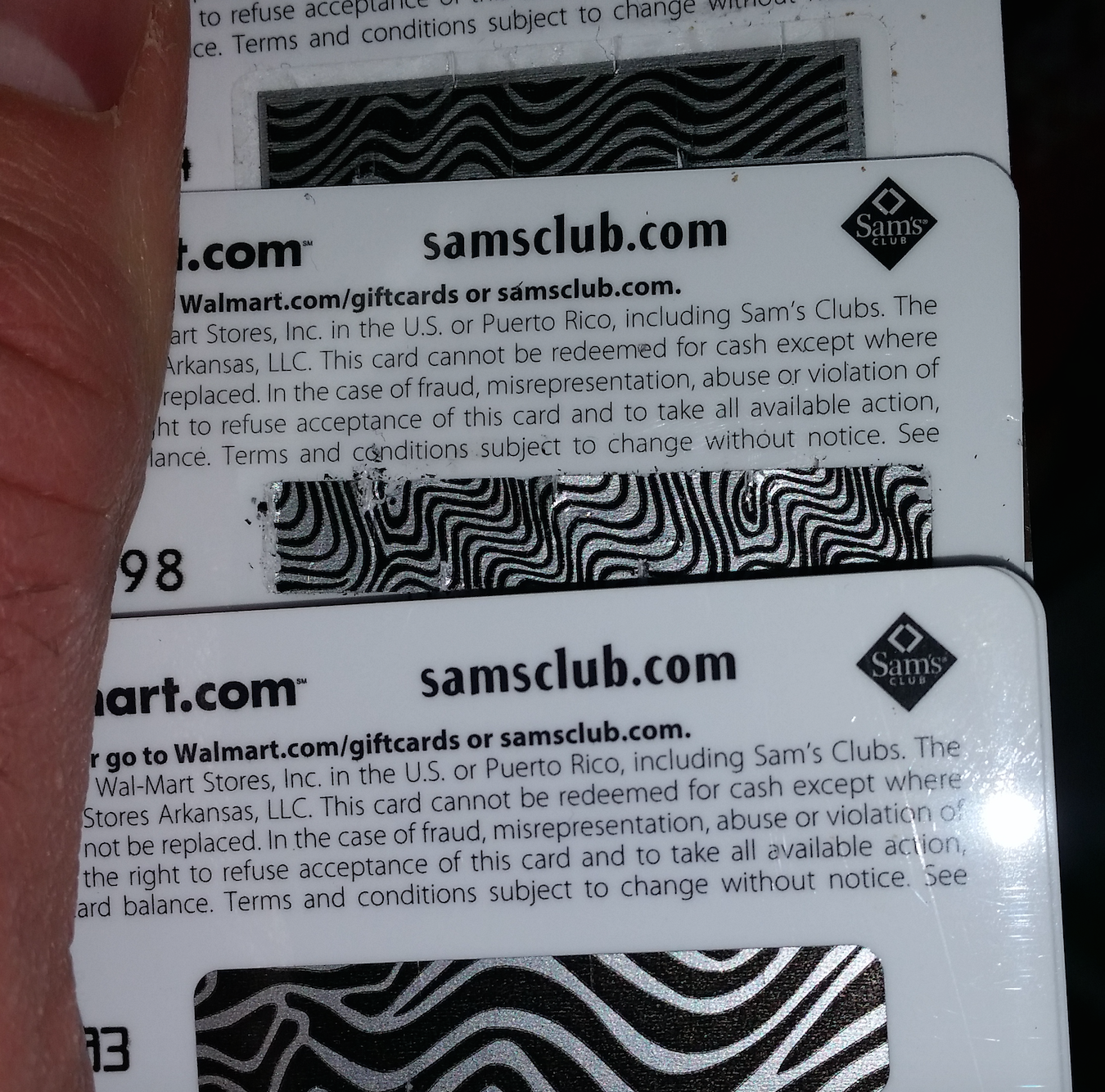
https://krebsonsecurity.com/2017/12/buyers-beware-of-tampered-gift-cards
The top two have been tampered with, the bottom one is intact:
https://krebsonsecurity.com/2017/12/buyers-beware-of-tampered-gift-cards


no subject
Date: 2017-12-23 12:27 pm (UTC)I wanted to purchase a Cumberland Farms card online for a co-worker but I did not want to use my debit card there as they've been hacked before.
no subject
Date: 2017-12-23 02:24 pm (UTC)It seems now that it's hard to find a vendor that hasn't been hacked one way or another. The first time that I had a card hacked it wasn't a card - an upstream check processor was hacked and compromised my account! Suddenly I found an $85 charge at a truck stop in North Carolina. If you're dealing with a site that you don't have confidence in, using a true credit card is a safe way to go. Law caps how much that you can be held responsible for when a credit card is compromised. The laws on debit card holder liability are much looser, but as a rule most all banks have been very good about reimbursing all losses. And some credit card companies have the ability to generate one-time card numbers for infrequent card purchases. As a rule, on sites that I do not frequent, I never have them 'remember my card number for convenient future purchases.'